
Oopsie Croco
Croco Studio InteractiveAdventure
4.631.00 Reviews
- Version
- 1.8.6
- Installs
- 100.00K
- Age Rating
- Everyone 10+
Screenshots
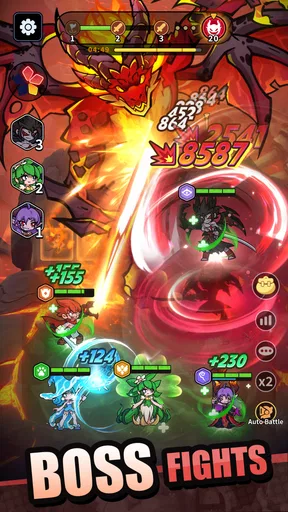
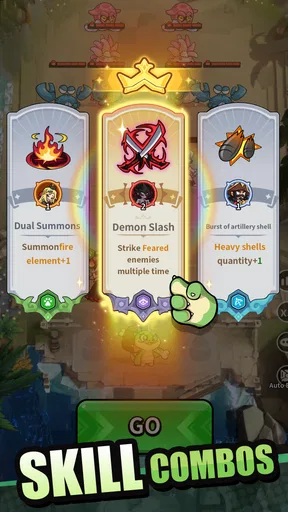
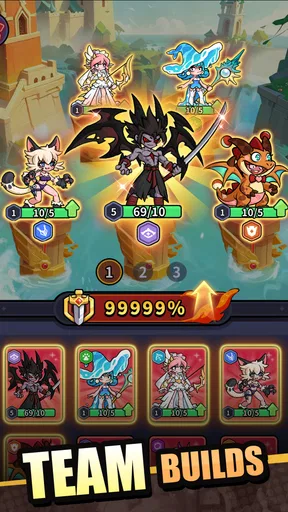
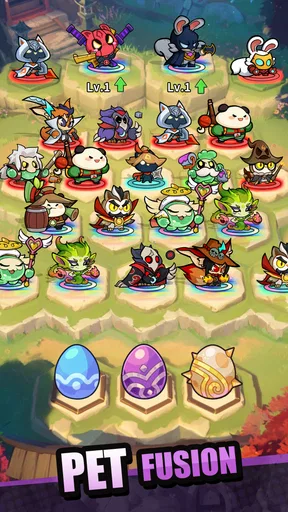
Our Review of Oopsie Croco
 Analysis by Appyee
I went into Oopsie Croco expecting a compact adventure game and found something more strategic than its playful name suggests. It comes from Croco Studio Interactive and combines roguelike decision-making with auto-battler combat, so the interesting part is usually not tapping quickly during a fight. It is deciding what to collect, what to combine, and when to accept a risky option instead of chasing a perfect build.
That distinction matters because this is not the right game for everyone. If you want direct platforming, a long story, or precise manual combat, you may feel removed from the action. If you enjoy experimenting with combinations and learning from a run that went badly, the format has more appeal. I found it easiest to enjoy when I treated each attempt as a short strategy exercise rather than expecting every run to end in victory.
The game is free to start and aimed at players aged Everyone 10+. Its store page shows a 4.6 average from around 5.7 thousand ratings, with more than 100 thousand installs. Those figures suggest that the basic idea has found an audience, but they do not remove the need to understand its friction points. The first few sessions can be less clear than the cheerful presentation implies.
Getting past the first points of friction
I found that the early friction is easier to handle when I separate learning the game’s choices from trying to win every run. I’ll look at practical ways to make those decisions feel more manageable, including how to tell a recoverable setback from a run that has lost its direction.
Why the opening can feel less obvious than expected
The auto-battler structure changes what “playing well” means. I initially wanted to focus on the battle itself, but the more useful habit is to inspect the choices around the battle. A run can turn on whether I invest in a promising combination now or keep a flexible option for a later encounter. That is a different rhythm from an adventure game where movement and timing are the main tests.
New players can also get stuck mentally because the game presents a sequence of decisions rather than one obvious route. When a fight goes poorly, it is tempting to assume that the opponent was simply too strong. Often, the more useful question is whether my earlier choices left the team without enough synergy or flexibility. I recommend pausing after a loss and identifying the first decision that narrowed my options, rather than immediately repeating the same pattern.
The most practical early rule is to avoid spending every useful resource as soon as it appears. Keeping one adaptable choice can be more valuable than forcing a combination that looks powerful in isolation. This is one of the less visible lessons of the format: a build that is slightly weaker now may be healthier if it gives you more ways to respond later.
Checks worth making before blaming the game
Because Oopsie Croco is a mobile game, I would begin with ordinary setup checks if the opening experience feels interrupted. I make sure the device is running at least Android 6.0, then close other demanding apps before launching it again. I also check that the game has finished loading its current content instead of assuming that a slow or incomplete start is a balance problem.
The current version is 1.8.6, so I would check the installed version before spending time troubleshooting a strange screen or an interaction that does not respond as expected. Keeping the game updated is especially sensible for a title built around repeated runs, because small interface or stability improvements can affect how smoothly those sessions feel.
A stable connection is another sensible first check whenever loading or account-related behavior becomes unreliable. I would switch between a dependable Wi-Fi connection and mobile data only as a basic test, not as a promise that every problem is network-related. If the game works normally after restarting, I would continue playing and watch for a repeatable pattern before changing anything more drastic.
Storage is easy to overlook. A device that is nearly full can behave unpredictably when an app needs to update or save temporary information. I would leave comfortable free space, restart the device, and try again. These are unglamorous steps, but they separate a local setup issue from a problem with the game itself.
A sensible first-session workflow
My preferred way to begin is to play one run without trying to optimize every choice. I look at what the game is offering, notice which combinations appear to work together, and accept that the first attempt is partly an orientation session. This reduces the pressure to understand the entire system immediately.
On the next run, I focus on one question: which choices actually improved the result? That might mean comparing a broad, adaptable setup with a narrow setup built around one attractive combination. The point is not to invent a universal winning formula. It is to learn which decisions create options and which decisions quietly remove them.
I also recommend reading each choice before confirming it, even when the wording seems familiar. Auto-battlers reward small differences, and rushing because the combat is automatic can lead to decisions that do not match the rest of the build. The game may look relaxed, but the strategic layer benefits from slowing down for a few seconds.
Recovering a run that starts badly
When a run begins poorly, I do not immediately abandon it. First, I check whether the problem is temporary or structural. A temporary setback may be survivable if the next choices can restore flexibility. A structural problem is different: if the setup has no useful direction and every available option depends on something I did not prepare for, continuing may teach less than starting fresh.
This creates a useful recovery workflow. I identify the strongest remaining direction, stop spending choices on unrelated ideas, and aim for a coherent build rather than a collection of individually appealing parts. In my experience, consistency is more valuable than collecting a little of everything. A run can recover when its choices start supporting one another, even if the early section was inefficient.
Another practical habit is to remember the decision immediately before a disappointing fight. If I cannot explain why the result happened, I have less chance of improving. Was the issue a weak combination, an overly narrow plan, or a failure to preserve a fallback? Writing a short note on my phone after a particularly confusing run sounds excessive, but it helps reveal repeated mistakes during longer play sessions.
That approach also prevents a common frustration: blaming randomness for every loss. Roguelike games naturally include uncertainty, so not every outcome is under the player’s control. Still, the best response to an unlucky result is to make the next run more resilient. I prefer choices that remain useful in several situations over choices that are spectacular only when a very specific sequence appears.
When restarting is better than forcing a result
There is a difference between learning from a difficult run and wasting time on a run that no longer has a sensible route forward. I restart when my choices have become disconnected and the remaining options cannot support a clear plan. I continue when the build is imperfect but still has a direction. This simple distinction keeps the game from becoming a cycle of frustration.
Players who dislike restarting may find the roguelike structure tiring. The game’s appeal depends on accepting that not every attempt is meant to be permanent progress in the traditional adventure-game sense. Each run is valuable when it teaches a decision pattern, but that value is easy to miss if the only goal is to reach the end every time.
Separating game friction from device friction
Some problems are not really caused by the game. If controls feel delayed across several apps, the device may be busy or the screen may be registering touches poorly. If only one interaction in Oopsie Croco repeatedly fails while the rest of the session works, I would restart the game and test the same action again before concluding that the whole title is unstable.
Battery-saving modes can also make mobile games feel less responsive, especially on older hardware. I would test a normal performance setting for a short session, then compare the result. This is not a recommendation to disable safety features permanently; it is simply a way to identify whether the device is restricting the app.
Heat is another useful clue. If the phone becomes unusually warm and performance drops over time, I would stop, let it cool, and try a shorter session. A game can appear to slow down because of the phone’s thermal behavior rather than because the game’s strategy systems are malfunctioning. Keeping the device out of direct sunlight and avoiding heavy background activity is a sensible everyday adjustment.
For crashes, I would use a gradual process: close the game, restart the device, confirm the version, and check available storage. I would avoid clearing app data casually because that can affect local progress or settings. If the problem continues, recording when it happens—during startup, after a particular action, or only after a long session—creates much more useful information than simply saying that the game does not work.
Free entry and the question of spending
Oopsie Croco is free to play, but it includes in-app purchases ranging from $0.99 to $99.99 per item. That range makes it important to decide in advance how you want to approach the game. I would first play without buying anything and work out whether the core loop holds my attention. The automatic combat and repeated decision-making need to be enjoyable on their own; purchases should not be the reason I continue.
For families, the Everyone 10+ rating is a useful starting point, but the purchase range still deserves attention on a shared device. I would use the device’s purchase controls and make sure the person playing understands that “free” does not mean every optional item costs nothing. That is a practical safeguard, not a criticism of the game’s genre.
The strongest reason to spend money would be personal enjoyment, not pressure created by a difficult run. If a purchase feels necessary simply to recover from a bad sequence, I would stop and reassess. In a roguelike, losing is part of the structure, and paying to avoid the lesson can reduce the strategic satisfaction that makes the game distinctive.
Who will enjoy this adventure game?
I think the best audience is someone who likes making choices under uncertainty and watching an automated battle reveal whether those choices worked. It suits short breaks because a player can make progress through a series of decisions without needing the reflexes demanded by an action game. It also works for players who enjoy comparing runs and gradually becoming better at recognizing useful combinations.
A realistic everyday scenario would be a commute or a quiet lunch break. I would start a run with enough time to make decisions calmly, then stop after a natural break rather than rushing through an important choice because I need to put the phone away. The game is a better fit for that kind of focused pause than for a situation where I can only glance at the screen for a few seconds.
It is less suitable for someone who wants a large world to explore manually. The adventure label may attract players expecting movement, discovery, and direct control, but the main appeal here is strategic planning around auto-battler encounters. Players who prefer story-heavy games may also find the repeated-run structure too abstract unless they already enjoy roguelike design.
Compared with a conventional action adventure, this game asks for less hand-eye precision and more patience. Compared with a traditional auto-battler, its adventure framing makes each run feel more like a sequence of changing situations than a single long match. That difference is appealing if you want experimentation in smaller sessions, but it may disappoint players looking for deep manual positioning or highly competitive multiplayer play.
What I would improve in my own play
My biggest improvement came from separating discovery from optimization. During the first few attempts, I tried to make every decision efficient and ended up learning very little. Once I allowed myself to test an unusual combination, I gained a clearer sense of which choices were genuinely compatible and which only looked attractive on their own.
I also stopped treating the strongest-looking option as automatically correct. A powerful choice with no support can be worse than a modest choice that keeps several routes open. This is a non-obvious trade-off, but it is central to getting more from the game. The best decision is often the one that protects the next decision.
Finally, I use shorter sessions when I am tired. Auto-battler games can appear easy because the fights run automatically, yet fatigue makes it much easier to skip descriptions or choose impulsively. When I play with attention, I notice patterns; when I play while distracted, losses feel arbitrary. The game rewards a small amount of concentration more than frantic input.
My practical verdict
Oopsie Croco is a pleasant choice for players who want a free adventure game built around roguelike experimentation and automated battles. Croco Studio Interactive has chosen a format that is approachable at the surface but asks for more thoughtful planning once the novelty wears off. I like that the most satisfying progress comes from understanding decisions rather than merely tapping through fights.
Its main limitation is also its identity. The game will not satisfy anyone looking for direct combat, expansive exploration, or a clearly scripted journey. The combination system can take time to read, and a poor run may feel unrewarding if you do not enjoy learning through failure. Setup and performance issues should be checked methodically before being treated as design problems, especially on older or busy devices.
I would recommend trying it if you enjoy building a plan from imperfect options, have patience for repeated attempts, and like short strategic sessions. I would skip it if automatic combat removes the fun for you or if you want every session to deliver a predictable sense of progress. For me, the deciding question is simple: do you enjoy asking why a run worked? If the answer is yes, this small crocodile-themed adventure has enough strategic texture to earn a place on your phone.
Verdict
Strengths of Oopsie Croco
- Simple controls make it easy for casual players to pick up.
- Short levels are convenient for quick gaming sessions.
- Bright cartoon visuals are appealing to younger players.
- Increasing challenges help maintain interest over time.
- Offline play is useful when you have no internet connection.
Limitations of Oopsie Croco
- Gameplay may feel repetitive after extended sessions.
- Some levels can become frustrating without careful timing.
- Limited content may reduce long-term replay value.
- Ads can interrupt play, depending on the version installed.
- Small screens may make precise taps harder for some players.
Similar Picks in This Category
View All
Roblox
Roblox Corporation4.2

Pokémon GO
Niantic, Inc.3.5

Ninja warrior: legend of adven
TOH Games4.6

Ninja Arashi
Black Panther4.6

Eyes - The Horror Game
Fearless Games sp. j.4.5

Critical Action:Gun Strike Ops
FPS Shooter & Action Game4.3
Frequently Asked Questions
What is Oopsie Croco and how is the game played?
Oopsie Croco is a casual mobile game centered on a playful crocodile character and short, interactive challenges. Its gameplay is designed to be easy to understand, making it suitable for quick sessions on a phone or tablet. Before downloading, players should expect simple controls, colorful presentation, and progressively more demanding tasks rather than a complex story-driven adventure.
Is Oopsie Croco suitable for children?
The game’s friendly visual style and straightforward mechanics may appeal to younger players, but parents should still review the store listing, age rating, and any available parental-control information before installation. Depending on the version, the app may include advertisements, optional purchases, or links to external content. Adult supervision is recommended, particularly when children use a shared device.
Does Oopsie Croco require an internet connection?
The connection requirements can depend on the platform version and the specific features included in the release. Basic gameplay may be available offline, while advertisements, updates, cloud features, or other online services could require internet access. It is best to launch the game once while connected, check which functions remain available offline, and avoid assuming that every feature works without a connection.
Are there advertisements or in-app purchases in Oopsie Croco?
Players should check the official Google Play or Apple App Store listing for the current monetization details before downloading, since advertisements and purchase options can change between updates or regions. If the game includes optional purchases, they may unlock content, remove advertising, or provide gameplay advantages. To prevent unexpected charges, enable purchase authentication and use parental controls where appropriate.
What devices are compatible with Oopsie Croco?
Compatibility depends on the operating system, required version, available storage, and the developer’s current support policy. Before installing, compare your device’s Android or iOS version with the requirements shown on the official store page. Keeping sufficient free space is also advisable, because the initial download may be small while later updates, cached content, or additional game resources can require more storage.
Play our best games!


